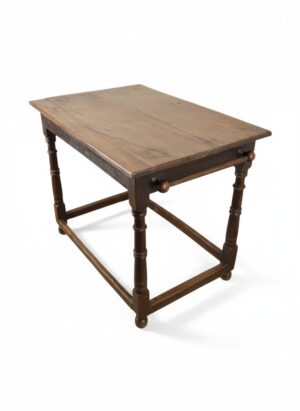
Wood staining is the process of changing the colour of timber by applying dyes, pigments or chemicals that penetrate or tint the surface. Stains are used to imitate more costly woods, to unify the colour of mixed timbers, to blend repairs and replacements into an existing surface and to achieve a particular decorative effect.
Furniture makers have long used stains. Pear and other fruitwoods were ebonised to imitate ebony, beech was stained to resemble walnut or mahogany, and inexpensive timbers were coloured to look like rosewood. Traditional materials included vegetable dyes, walnut crystals, oxides and chemical treatments such as fuming oak with ammonia, which darkens the tannins in the wood and was popular in Arts and Crafts and Edwardian furniture. Water, spirit and oil-based stains each behave differently and suit different finishes. In restoration, staining is an essential skill for colour-matching new timber, filled areas and veneer patches so that repairs become unobtrusive. Collectors should be aware that staining can also be used to disguise replacement parts, marriages or later timber, so close inspection of the colour inside drawers, under tops and on unpolished surfaces helps reveal the true history of a piece.