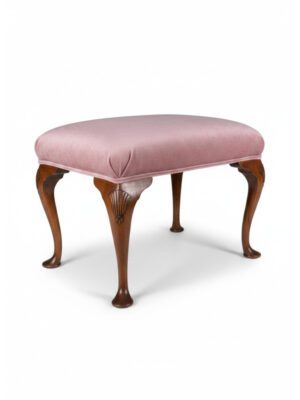
An upholstery panel is a piece of fabric, needlework or tapestry woven or worked to a specific shape and size for covering a particular part of a piece of furniture, such as a chair seat, chair back, sofa back or footstool top. Unlike fabric cut from a roll, these panels were designed as self-contained compositions with a central motif and border.
Shaped panels were produced in quantity by the great French tapestry workshops of Aubusson and Beauvais, which wove covers for complete suites of seat furniture depicting flowers, pastoral scenes and fables. In Britain, domestic needlework panels in wool and silk were popular from the eighteenth century, and the Victorian enthusiasm for Berlin woolwork created many floral and figurative chair and stool covers worked by amateur needlewomen. Surviving panels, whether still on furniture or removed from it, are collected as textiles in their own right, and are sometimes framed or made into cushions. When assessing an upholstery panel, collectors look at the quality and fineness of the stitching or weaving, the brightness of the colours, the extent of fading and wear, and whether the panel has been restored, rewoven or reworked.