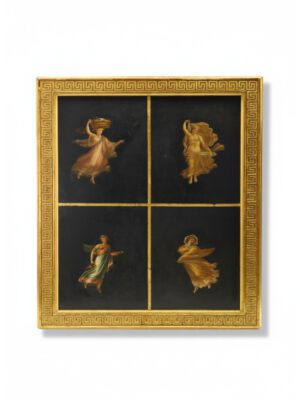
Greek key is a decorative border pattern composed of a continuous line folded back on itself in a series of right-angled turns, creating an interlocking repeating design. It is also known as a fret, meander or key pattern, and is one of the most enduring motifs of classical ornament.
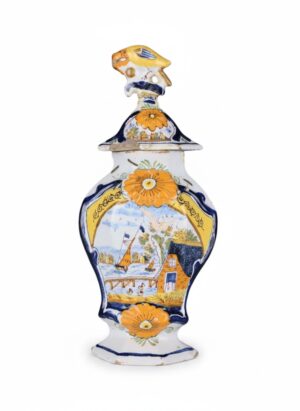
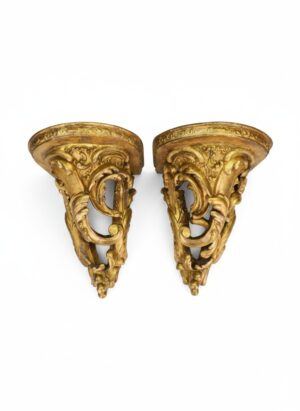
The pattern appears widely on ancient Greek pottery and architecture, and the name meander is often linked to the winding River Maeander in Asia Minor. Similar key patterns also developed independently in Chinese decoration. Greek key was revived in Britain during the Neoclassical period of the later eighteenth century and became especially fashionable during the Greek Revival and Regency years, appearing in carved friezes, brass inlay, gilded mirror frames, plasterwork cornices, chimneypieces, textiles and wallpapers. It was used on silver, ceramics and glass, and in cast iron for railings and balconies. Victorian and twentieth-century designers continued to employ it, and it remains popular in contemporary interiors for borders on rugs, upholstery and tiles. On antique furniture, crisply cut and well-proportioned Greek key decoration that is integral to the design is a mark of quality, while applied mouldings should be checked to ensure they are original.