Copper engraving is an intaglio printmaking technique in which an image is cut into a polished copper plate using a sharp steel tool called a burin or graver. To print, ink is worked into the engraved lines, the surface of the plate is wiped clean, and dampened paper is pressed against it in a rolling press, drawing the ink out of the grooves to produce a sharp, finely detailed image.
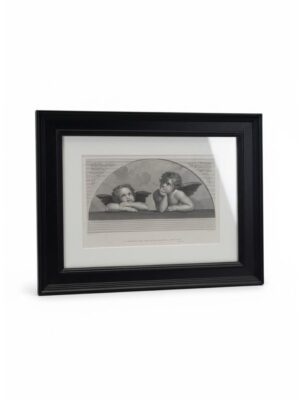
Engraving on copper developed in Germany and Italy in the fifteenth century, and Albrecht Dürer brought the technique to an extraordinary level of refinement. From the sixteenth to the early nineteenth century it was the principal means of reproducing images, used for book illustration, portraits, maps, topographical and architectural views, ornament prints and reproductions of famous paintings. Engravers built up tone through closely spaced lines, cross-hatching and dots, and the technique was often combined with etching. Because copper is relatively soft, plates wore with use, so early impressions are sharper than later ones. From the 1820s steel plates, which allowed far longer print runs, increasingly replaced copper. Collectors look for strong early impressions, good margins, a visible plate mark and paper free from foxing and staining. Framed engravings remain popular in libraries, studies and period interiors.