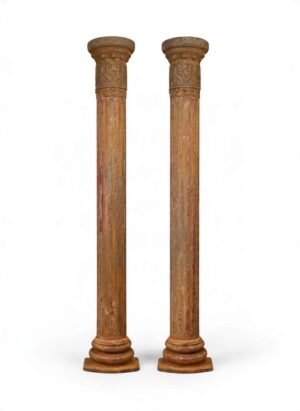
The Composite order is one of the five classical orders of architecture, along with the Tuscan, Doric, Ionic and Corinthian, and it is generally regarded as the most ornate. Its capital combines the large scrolled volutes of the Ionic order with the rows of acanthus leaves of the Corinthian, and it is usually used with a tall, slender column, an elaborate base and a richly decorated entablature.
The Composite order was developed by the Romans, with one of the best-known early examples on the Arch of Titus in Rome, but it was only formally recognised as a separate order during the Renaissance, when theorists such as Serlio and Palladio codified the five orders in their architectural treatises. It became popular during the Renaissance, Baroque and Neoclassical periods for triumphal arches, grand interiors, church facades and monuments, conveying a sense of grandeur and magnificence. In Britain, the Composite order was used in Georgian and Victorian architecture, as well as in furniture, chimneypieces, mirrors, clock cases and architectural salvage. Composite columns and capitals in carved stone, timber, plaster or cast iron are sought after for interiors and gardens, and the crispness of the carving and completeness of the volutes and leaves are a good indication of quality.