English needlework is the broad term for the decorative embroidery and other needle-worked textiles made in England over many centuries. It includes ecclesiastical vestments, samplers, crewelwork, stumpwork, whitework, canvas work, quilting and Berlin woolwork, worked both by professional embroiderers and by women and girls at home.
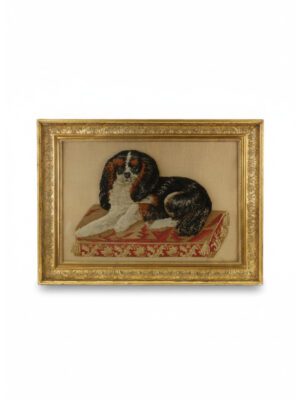
In the Middle Ages English embroidery known as opus anglicanum was famous across Europe for its fine silk and gold work on church vestments. Tudor and Elizabethan households produced richly embroidered cushions, bed hangings, coifs and costume, and the seventeenth century saw raised work, now known as stumpwork, on caskets and pictures, alongside long band samplers and crewelwork bed hangings in coloured wools on linen. The eighteenth century favoured canvas work for chair seats and screens, silk pictures and fine whitework, while in the nineteenth century Berlin woolwork, worked from printed charts, became a popular pastime before the Arts and Crafts movement and figures such as William Morris encouraged a return to natural dyes and freer designs. Collectors look for good colour, fine and even stitching, original mounts and dated or inscribed pieces. Fading, moth and old repairs affect value, and needlework should be displayed out of direct sunlight.